
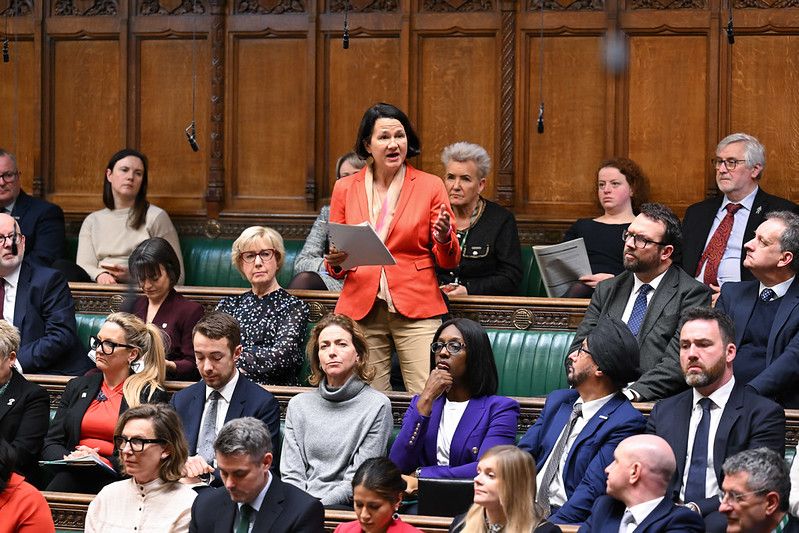
We need to end the court backlog and we need to ensure access to justice for all. But to do any of this, we need to properly fund our justice system.
Yesterday, I spoke in the House of Commons on the Second Reading of the Courts and Tribunals Bill.
The criminal justice system that the government inherited is on the brink of collapse. Years of inaction by the Tories have created a system that is no longer fit for purpose, where justice delayed has become justice denied. The numbers reveal a system spiralling out of control. Since 2019, the Crown Court backlog has more than doubled: from 38,000 cases to nearly 80,000.
However, this Bill proposes to remove a defendants’ right to elect for trial in the Crown Court for all “either-way” criminal offences (those than can be heard in either the Magistrates’ Court or the Crown Court). It also proposes a new tier of the existing Crown Court – the Bench Division – to hear either-way cases likely to receive a custodial sentence of three years or less by judge alone. These are changes that need incredibly careful consideration – we need to interrogate the detail.
Why is the court backlog so great? Much has been said about defendants gaming the system – I have no doubt that this happens in some cases. But let’s not ignore the delays in police investigations, often due to the cuts that the police have endured over the previous decade. This means that cases can take years to get from arrest to charge. Let’s also not ignore the need to look again at the structure and funding of the Crown prosecution Service so that decisions can be made more swiftly.
One of my constituents, a practising legal aid solicitor of many decades standing, recently told me about his client 19-year-old client who has just been sentenced for an incident that occurred in November 2024 when he was 17-year-old. This client wasn’t gaming the system – he pleaded guilty – it was simply a case where the police took over 12 months to make a charging decision.
I welcome the recent announcement of a £92 million investment in criminal legal aid: a 24% overall uplift in funding. I also welcome the £287 million to be invested in our court service for vital repairs and digital upgrades to court buildings. But we need to be aware of just how starved of funding our legal aid system and our courts service has become after years of neglect under the previous government. If more cases are going to be heard in the Magistrates’ Court, then we need to be aware that legal aid funding for Magistrates’ Court cases often barely covers costs. This is why I have serious concerns about the mechanics of what is being proposed here.
As it stands, there is an automatic right to appeal a Magistrates’ Court conviction in the Crown Court – 40% of appeals from the Magistrates’ court to the Crown court against conviction are successful. This Bill would end the automatic right to appeal a Magistrates’ Court conviction. What’s more, legal aid in the Magistrates’ Court is currently means tested and the income threshold is just £22,000 per year – those in full-time minimum wage jobs may not qualify for representation! Should this bill become law as it stands, are defendants who are not eligible for legal aid but are barely managing to keep their head above water expected to draft their own grounds of appeal?
I did not vote against these proposals at this point in the parliamentary process because I want to see further robust debate and scrutiny of these crucial issues – this is why the Committee Stage, which comes next, is so important. First and foremost, I will be advocating for proper funding for our courts service together with a full review of legal aid in Magistrates’ Court proceedings and the provisions in the bill that alter rights of appeal. Justice delayed is justice denied, but unaffordable justice is no justice at all.